downloads | documentation | faq | getting help | mailing lists | licenses | wiki | reporting bugs | php.net sites | links | conferences | my php.net

search for in the

エラーのレポート> <ストレージの暗号化
Last updated: Fri, 06 Nov 2009

view this page in

SQLインジェクション

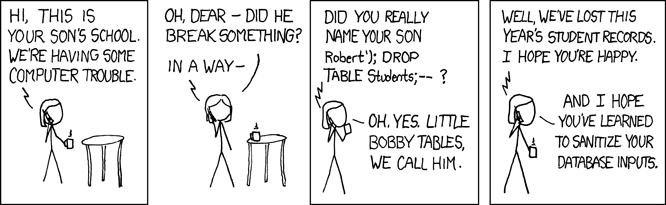
多くの開発者はSQLクエリがどのように改竄されるかということを余り 気にかけておらず、またSQLクエリは信用できるものと考えているようです。 実際にはSQLクエリはアクセス制限を回避することが可能で、従って 通常の認証や権限のチェックを無視することができます。時には、 OSレベルのコマンドを実行できてしまうこともあります。

ダイレクトSQLコマンドインジェクション(SQLコマンドの直接実行)という手法は、 攻撃者がSQLコマンドを生成もしくは既存のコマンドを変更することで 隠蔽すべきデータを公開したり、重要なデータを書き換えたり、データベース ホストで危険なシステムレベルのコマンドを実行したりするものの事です。 この手法は、ユーザからの入力をスタティックなパラメータと組み合わせて SQLクエリを生成するアプリケーションにおいて使用されます。以下の例は 不幸なことに実際の事例に基づいたものです。

入力のチェックを怠っており、スーパーユーザもしくはデータベース作成権限を 持つユーザ以外のユーザでデータベースに接続していない ために、攻撃者はデータベースにスーパーユーザを作成することが出来ます。

例1 表示するデータを分割し ... そしてスーパーユーザを作成します。 (PostgreSQLの例)

$offset = $argv[0]; // 入力チェックが行われていません!
$query  = "SELECT id, name FROM products ORDER BY name LIMIT 20 OFFSET $offset;";
$result = pg_query($conn, $query);

通常のユーザは、$offsetがURL埋め込まれている '次へ'または'前へ'リンクをクリックします。スクリプトは、受け取った $offsetが数字であることを期待します。しかしながら、 攻撃者はurlencode()された以下のようなURLを追加 することで攻撃を試みます。

0;
insert into pg_shadow(usename,usesysid,usesuper,usecatupd,passwd)
    select 'crack', usesysid, 't','t','crack'
    from pg_shadow where usename='postgres';
--

このようなことが行われると、スクリプトは攻撃者にスーパーユーザ権限での アクセスを提供してしまいます。0;が正しいオフセット 指していると同時に、クエリをそこで終端させていることに気をつけてください。

注意: SQLパーサにクエリの残りの部分を無視させるために開発者によく使わ れる技法として、SQLのコメント記号である--があ ります。

パスワードを取得する恐るべき手段に、サイトの検索結果のページを欺く というものがあります。攻撃する者が必要とするものは、投稿された変数 の中でSQL命令で使用される際に正しく扱われていないものがあるかどう かを確かめるだけです。これらのフィルタは、通常、 SELECT文のWHERE, ORDER BY, LIMIT及びOFFSET句をカスタマイズするた めに前に置かれる形で設定されます。使用するデータベースが UNION構造をサポートしている場合、 攻撃者は元のクエリに任意のテーブルからパスワードのリストを取得する クエリを追加しようとするかもしれません。 暗号化されたパスワードフィールドを使用することが強く推奨されます。

例2 記事...そして(全てのデータベースサーバーの)いくつかのパスワード のリストを表示する

$query  = "SELECT id, name, inserted, size FROM products
                  WHERE size = '$size'
                  ORDER BY $order LIMIT $limit, $offset;";
$result = odbc_exec($conn, $query);

クエリの静的な部分は、以下のように全てのパスワードを外部にもらす別の SELECT文と組み合わせることができます。

'
union select '1', concat(uname||'-'||passwd) as name, '1971-01-01', '0' from usertable;
--

('及び--を使用する) このクエリが$queryで使用される変数の1つに代入 された場合、この悪意のあるクエリが実行されることになります。

SQL UPDATE もデータベースを攻撃するために使用されます。これらのク エリも切捨てたり新しいクエリを元のクエリに追加することによる攻撃 を受けます。しかし、攻撃者はSET句を使用する可 能性があります。この場合、クエリを成功させるためにいくつかのスキー マ情報を保有する必要があります。これは、フォームの変数名や総当た り法により調べることができます。パスワードまたはユーザ名を保存す るフィールド用の命名記法はそう多くはありません。

例3 パスワードのリセットから ... (全てのデータベースサーバーで)より多 くの権限を得るまで

$query = "UPDATE usertable SET pwd='$pwd' WHERE uid='$uid';";

しかし、悪意のあるユーザは、管理者のパスワードを変更するために 値 ' or uid like'%admin%'; --$uid に代入するか、または、より多くの権限を得 るために、単純に$pwd に(後ろに空白を付けて) "hehehe', admin='yes', trusted=100 "と設定する 可能性があります。この場合、このクエリは以下のように改謬されてし まいます。

// $uid == ' or uid like'%admin%'; --
$query = "UPDATE usertable SET pwd='...' WHERE uid='' or uid like '%admin%'; --";

// $pwd == "hehehe', admin='yes', trusted=100 "
$query = "UPDATE usertable SET pwd='hehehe', admin='yes', trusted=100 WHERE ...;"

恐ろしい例として、いくつかのデータベースホストのオペレーティン グシステムレベルのコマンドがアクセス可能となる方法を示します。

例4 データベースホストのオペレーティングシステムを攻撃する (MSSQLサーバー)

$query  = "SELECT * FROM products WHERE id LIKE '%$prod%'";
$result = mssql_query($query);

攻撃者が、値 a%' exec master..xp_cmdshell 'net user test testpass /ADD' --$prodに投稿した場合、 $query は以下のようになります。

$query  = "SELECT * FROM products
                    WHERE id LIKE '%a%'
                    exec master..xp_cmdshell 'net user test testpass /ADD'--";
$result = mssql_query($query);

MSSQLサーバ−は、新規ユーザをローカルアカウント用データベースに追 加するコマンドを含むSQL命令をバッチ実行します。 このアプリケーションがsaで実行され、 MSSQLSERVERサービスが充分な権限で実行されている場合、攻撃者は このマシンにアクセスする権限を有することになります。

注意: 上記のいくつかの例は、データベースサーバの種類に依存しています。 これは、他の製品に対して同様な攻撃ができないことを意味するもので はありません。使用しているデータベースが他の手段で攻撃可能である 可能性もあります。

回避する方法

ほとんどの例では攻撃する者は特定のデータベースのスキーマに関して 若干の情報を保有している必要があると弁解されるかもしれません。 これは正しいですが、いつ何時これが外部にもれうるかを知ることはで きませんし、いったんこの情報がもれると、データベースが外部に開示 される可能性があります。オープンソースまたは一般的に入手可能なデー タベース処理パッケージを使用している場合(これはコンテンツ監理シス テムまたはフォーラムに含まれている可能性があります)、侵入者は簡単 に使用されているコードの一部を入手することができます。そのコード の設計が悪い場合にもセキュリティリスクを生じる可能性があります。

これらの攻撃は、セキュリティを考慮して書かれていないコードを攻撃 する方法です。特にクライアント側から入力されるあらゆる種類の入力 を決して信用しないでください。これは、selectボックスやhidden input フィールド、Cookieの場合も同様です。最初の例は、このような欠点の ないクエリが破滅をもたらしうることを示すものです。

  • データベースにスーパーユーザーまたはデータベースの所有者として 接続しないでください。 非常に制限された権限を有するカスタマイズ されたユーザを常に使用してください。
  • 指定された入力が期待するデータ型であることを確認してください。 PHPは、多くの種類の入力検証用関数を有しており、 変数関連の関数文字型関数にある簡単な関数 (例: それぞれ、is_numeric(), ctype_digit()) や、 Perl互換の正規表現のサポートま であります。
  • アプリケーションが、数値入力を期待している場合、データを is_numeric()で検証するか、 settype()により暗黙の型変換を行うか、 sprintf()により数値表現を使用することを検討 してみてください。

    例5 ページング用のクエリを構築するためのより安全な方法

    settype($order, 'integer');
    $query  = "SELECT id, name FROM products ORDER BY name LIMIT 20 OFFSET $offset;";

    // フォーマット文字列の%dに注意してください。%sを使用しても意味がありません。
    $query = sprintf("SELECT id, name FROM products ORDER BY name LIMIT 20 OFFSET %d;",
                     $offset);

  • データベースに渡される数値以外のユーザ入力を データベース固有の文字列エスケープ関数 (mysql_real_escape_string(), sqlite_escape_string() など) でクオートしてください。 データベース固有の文字列エスケープ機能が利用できない場合、 addslashes() および str_replace()関数が利用できるでしょう。 (データベースの型に依存) 最初の例を参照 してください。前期の例が示すように、クエリの静的な部分をクオート するだけでは充分ではなく、簡単にクラックされてしまう可能性があ ります。
  • データベース固有の情報、特にスキーマに関する情報は出力してはい きません。エラー出力およ びエラー処理およびログ関数 も参照ください。
  • ユーザがテーブルまたはビューに直接アクセスできないように、 データアクセスを抽象化することを目的としてストアドプロシージャ 及び事前に定義したカーソルを使用することもできますが、このソリュー ションには、副作用があります。

これらのケースにおいて、スクリプトまたはサポートされている場合は データベース自体でクエリのログをとることが有益です。 明らかにログは破壊的な行為を防止することはできませんが、攻撃され たアプリケーションを追跡する際には有効です。ログ自体は有益ではあ りませんが、含まれている情報は有益です。通常、より詳細なログをと る方が良いでしょう。


エラーのレポート> <ストレージの暗号化
Last updated: Fri, 06 Nov 2009
 
add a note add a note User Contributed Notes
SQLインジェクション
fyrye
06-Aug-2009 10:59
Another way to prevent SQL injections as opposed to binary, is to use URL Encoding or Hex Encoding.
I haven't seen a complete example of stopping SQL Injections, most refer to use the mysql_real_escape_string function or param statements.

Several examples at http://en.wikipedia.org/wiki/SQL_injection

Which will stop \x00, \n, \r, \, ', " and \x1a based attacks.
Alot depends on your SQL query structure, though vector level attacks are still viable.

Other than that build your own regex replacement to protect specific queries that could alter or compromise your database/results for specific sections of your processing pages.
Also use unique table and field names. Not just putting _ infront of them...
Example, don't store User/s or Customer/s information in a table named the same.
And NEVER use the same form field names for database field names.
bendikt [at] armed [dot] nu
27-Jul-2009 02:31
i just played around with the array_walk function.
It suddenly struck me that almost all super globals are arrays.
So what i discovered was that i can apply the array_walk function to the super globals. Doing so you automatically run a function call through the super globals
With this piece of code i wrote you should be able to secure most of you input data.

<?php

class secure
{
    function
secureSuperGlobalGET(&$value, $key)
    {
       
$_GET[$key] = htmlspecialchars(stripslashes($_GET[$key]));
       
$_GET[$key] = str_ireplace("script", "blocked", $_GET[$key]);
       
$_GET[$key] = mysql_escape_string($_GET[$key]);
        return
$_GET[$key];
    }
   
    function
secureSuperGlobalPOST(&$value, $key)
    {
       
$_POST[$key] = htmlspecialchars(stripslashes($_POST[$key]));
       
$_POST[$key] = str_ireplace("script", "blocked", $_POST[$key]);
       
$_POST[$key] = mysql_escape_string($_POST[$key]);
        return
$_POST[$key];
    }
       
    function
secureGlobals()
    {
       
array_walk($_GET, array($this, 'secureSuperGlobalGET'));
       
array_walk($_POST, array($this, 'secureSuperGlobalPOST'));
    }
}

?>
Note that you can modify this in anyway to suit your needs.
The Script has been tested.
Quietust
03-Jun-2009 12:23
An anonymous comment below suggests using PEAR with prepare() / execute() - though it was posted 3 years ago, it is still true today, though it's even easier now since PDO is included in most distributions. For SET/WHERE clauses and INSERT statements, just prepare the query with question marks in place of the dynamic parameters, bind each value in, then execute it, and it'll do all of the escaping for you, rendering the query immune to injection. Dynamic substitution of ORDER BY or LIMIT clauses has to be done the old fashioned way, though, so you still need to be careful with those.

Even without PDO, if you're using Postgres, you've already got the means to use parameterized queries, and if you're using MySQL, you simply need to ignore the outdated "mysql" extension and use "mysqli" instead.
fOV
12-Nov-2008 12:53
The best prevention is to deactivate master..xp_cmdshell.
Run in isql the command `sp_configure 'xp_cmdshell''
If the value for "config value" is 1 then make in the isql
`sp_configure 'xp_cmdshell',0'.
If you want see the options from your mssql-Server make
`sp_configure 'show advanced options',1'
and then `sp_configure'
jaimthorn at yahoo dot com
13-Oct-2008 09:32
dark dot avenger at email dot cz wrote:

"I think that easy way to protect against SQL injection is to convert inputted data into binary format, so that whatever input is, in sql query it will consist only of 1s and 0s."

Unless there is a 1-to-1 correspondence between your inputted data and the characters in your 'binary' format, a SELECT query wouldn't work anymore.  Not a binary format, but it makes my point: MIME encoding the text 'Dark Avenger' results in 'RGFyayBBdmVuZ2Vy'.  If I wanted to look up anyone with 'Avenger' in his/her name, then 'Avenger' would be encoded as 'QXZlbmdlcg==' which clearly wouldn't result in a hit on 'RGFyayBBdmVuZ2Vy'.

If there IS a 1-to-1 correspondence, then EITHER your solution only makes it a bit harder to perform a SQL injection (a hacker would have to figure out what mapping was used between the text and the 'binary' format), OR you've come up with simply another way to escaping your data.  Either isn't a terribly good solution to the SQL injection problem.
dark dot avenger at email dot cz
14-Aug-2008 08:09
I think that easy way to protect against SQL injection is to convert inputted data into binary format, so that whatever input is, in sql query it will consist only of 1s and 0s.
valerylourie at gmail dot com
15-Apr-2008 07:23
Note that PHP 5 introduced filters that you can use for untrusted user input:
http://us.php.net/manual/en/intro.filter.php
ctm at etheon dot net
01-Aug-2006 03:39
This is a very helpful document from the MySQL site (in .pdf format) :

http://dev.mysql.com/tech-resources/articles/
guide-to-php-security-ch3.pdf
17-Mar-2006 05:48
If you use the PEAR package and prepare() / execute() your queries,
you will hardly have to worry about any of this. Of course, it's still
a good idea to make sure you're putting valid data in your database...
anonymous
25-Jan-2005 08:42
Here is a useful class that deals with SQL injection:

http://www.phpinsider.com/php/code/SafeSQL/

エラーのレポート> <ストレージの暗号化
Last updated: Fri, 06 Nov 2009
 
 
show source | credits | stats | sitemap | contact | advertising | mirror sites